

Media
10 Sep 2026
Directional vs. Non-Directional Tread Patterns: What’s the Difference?
Tire tread patterns affect more than just appearance. They also play an important role in water evacuation, wet grip, driving stability, and tire rotation.
So, what is the difference between directional and non-directional tread patterns?
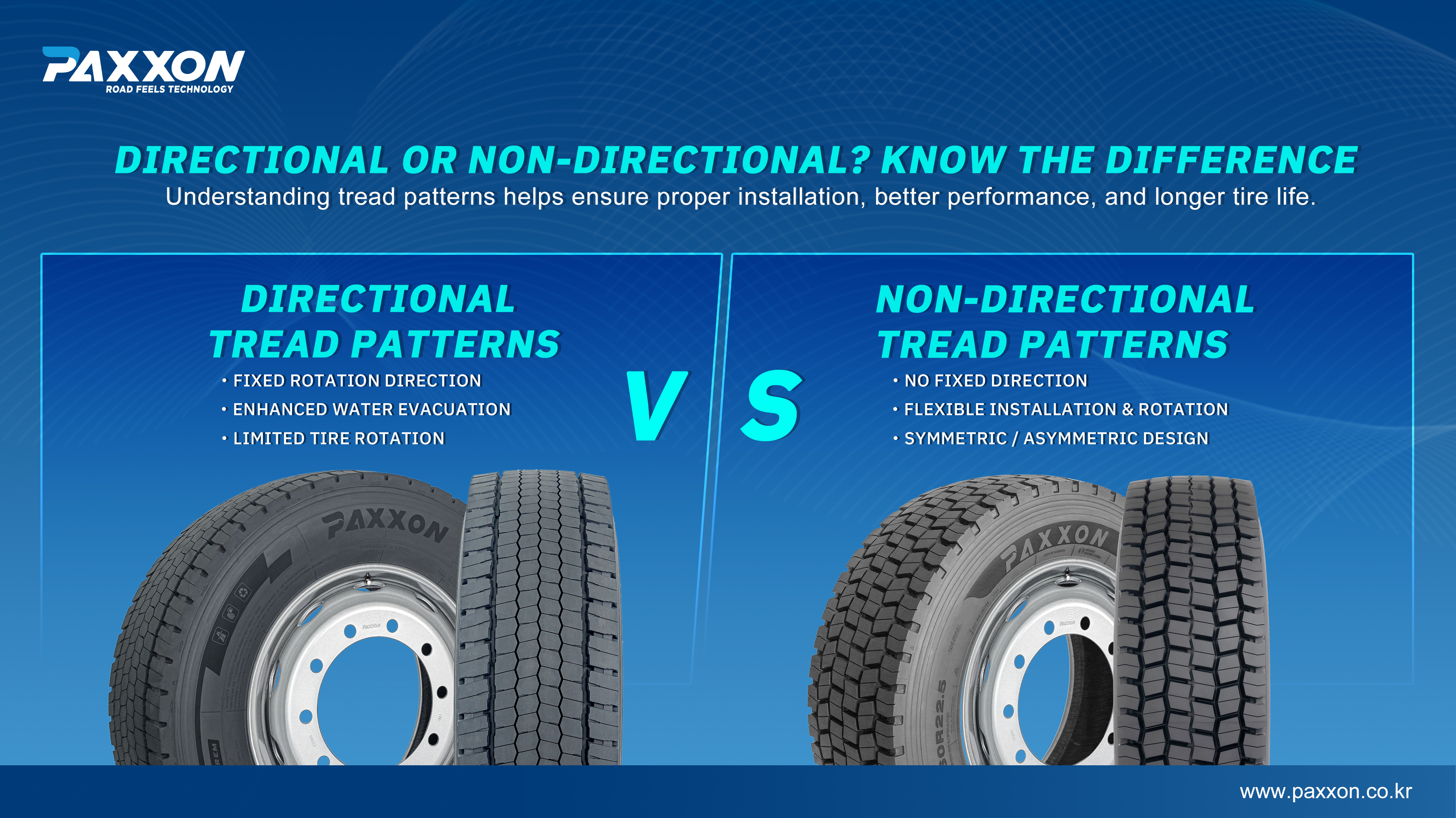
Directional tread patterns have a specific direction of rotation. The tread usually features a V-shaped, chevron, or arrow-like design, with a “ROTATION” arrow marked on the sidewall. Their specially designed grooves help evacuate water quickly, providing good wet-weather traction, water drainage, and driving stability. However, directional tires must be installed according to the rotation arrow. Their rotation options are also more limited, and they are generally rotated from front to rear on the same side, rather than crossed from one side to the other.
Non-directional tread patterns do not have a fixed direction of rotation and are mainly divided into symmetric and asymmetric tread patterns.
Symmetric tread patterns have a similar design on both sides of the tread and do not have a fixed rolling direction. This makes installation and tire rotation more flexible, while providing good durability, comfort, and overall performance.
Asymmetric tread patterns use different designs on the inner and outer sides. The outer side typically features larger tread blocks to enhance dry-road handling and stability, while the inner side uses more grooves to improve water evacuation and wet-weather performance. The sidewall is marked “OUTSIDE / INSIDE”, and the tire must be installed with the correct side facing outward.Balanced overall performance, mainly PCR tires designed for mid- to high-end passenger cars.
In simple terms, remember:
· Directional tread → Check “ROTATION”
· Asymmetric tread → Check “OUTSIDE / INSIDE”
· Symmetric tread → Usually no fixed direction
Correct installation and proper tire rotation not only help tires deliver their designed performance, but also reduce irregular wear and extend tire service life.
back