

Media
02 Jul 2026
Tire Regrooving Guide: How to Extend Tire Life and Reduce Fleet Operating Costs
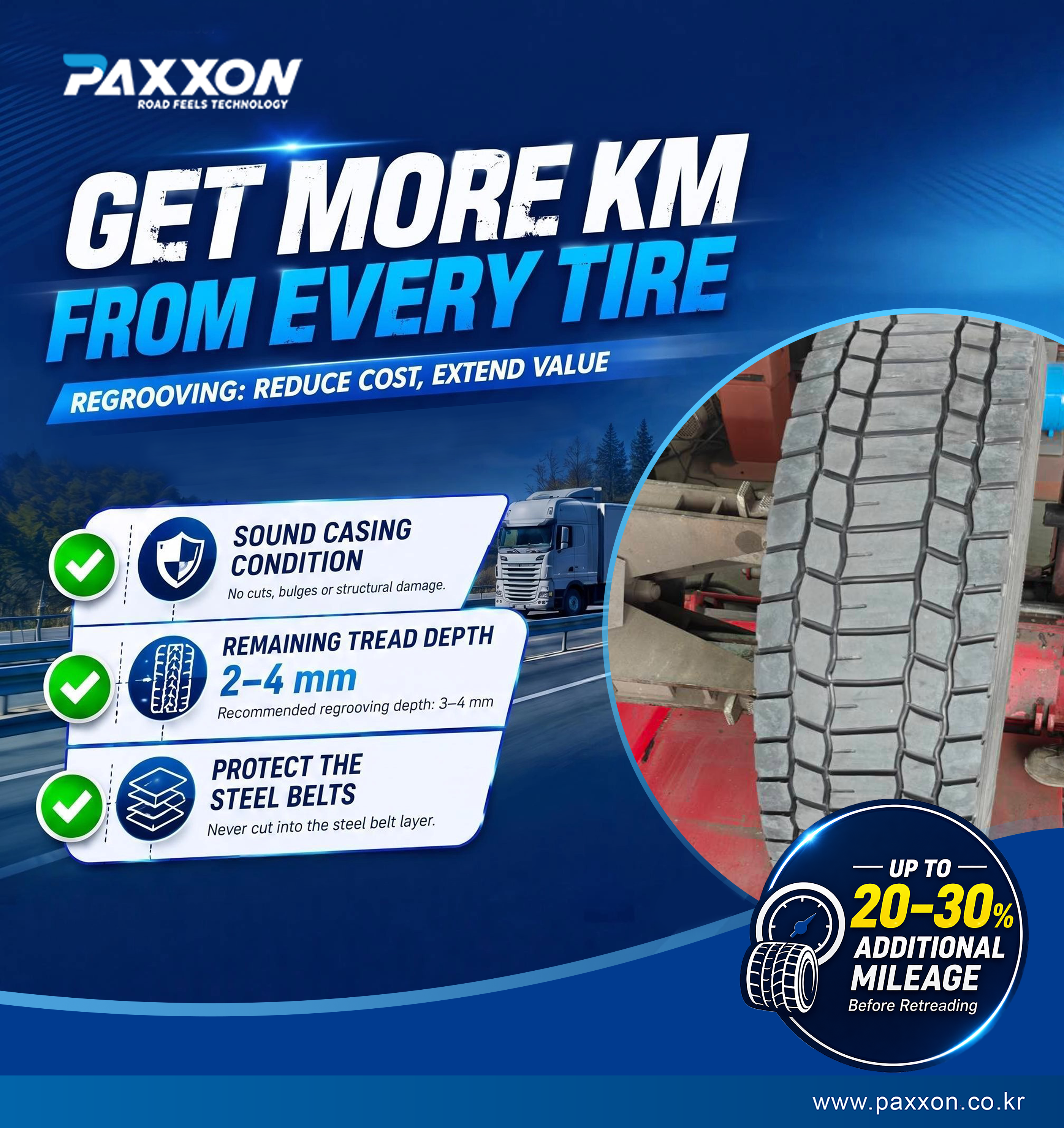
For many European fleets, tire regrooving is more than just a routine maintenance procedure—it is a proven way to extend tire service life and reduce the Total Cost of Ownership (TCO).
When performed at the right time and in accordance with the tire manufacturer's recommendations, regrooving can typically deliver an additional 20–30% of tire mileage, helping fleets maximize tire utilization and lower their cost per kilometer.
Before regrooving, the tire should be thoroughly inspected to ensure that:
·The casing is in good condition, with no bulges, cracks or structural damage.
·The remaining tread depth is approximately 2–4 mm, making the tire suitable for regrooving.
·The regrooving depth complies with the tire manufacturer's specifications.
·The steel belts remain fully protected throughout the regrooving process to maintain the tire's structural integrity and safety.
Only when these conditions are met can regrooving deliver its full benefits while preserving the tire's safety and retreadability.
PAXXON commercial tires are engineered with durability, regroovability and retreadability in mind. Combined with regular inspections, proper tire inflation, tire rotation and professional regrooving practices, they help fleets maximize tire life, improve vehicle uptime and reduce overall operating costs.
Before carrying out any regrooving work, always follow the tire manufacturer's technical recommendations and ensure the procedure is performed by qualified professionals to maintain safe and reliable tire performance throughout its service life.
back